Sovereign cloud is becoming a governance choice
Sovereign cloud is becoming a governance choice
Infomaniak’s latest governance move is unusual for a cloud provider: its founder, Boris Siegenthaler, has transferred the majority of Infomaniak’s voting rights to a Swiss public-interest foundation. The structure is designed to make the company’s independence durable, because the foundation holds special non-transferable shares and can block a takeover or change of control.
Cloud infrastructure used to be just a procurment line. Not anymore. It now defines where data lives, which laws can reach it, who operates the systems, and how much control customers retain over their own stack. For individuals, companies, and public institutions in Europe, choosing a cloud provider is increasingly a governance decision.
The most interesting part of Infomaniak’s model is that sovereignty is implemented structurally. The company says the foundation will not run daily operations, but it will protect the chartered principles behind the business: independence, digital sovereignty, privacy, environmental responsibility, transparency, local roots, and sustainable profitability.
This is a strong signal: A provider can advertise privacy or European values; a voting-rights structure changes the incentives around future ownership. It reduces the risk that today’s commitments are diluted by a later acquisition, investor pressure, or strategic pivot.
For European customers, the practical advantage of avoiding dependency on US hyperscalers is control. Data hosted in Switzerland, operated by Swiss teams, and governed by a Swiss corporate structure has a clearer jurisdictional and operational perimeter. Infomaniak also states that customer data is not resold, not used to train artificial intelligence models without explicit consent, and can be exported through open formats and documented application programming interfaces. (Infomaniak Network News)
There is also an ecosystem argument. When infrastructure, engineering, support, taxes, and suppliers remain local where possible, cloud spending helps build regional capability instead of concentrating technical leverage elsewhere. That matters for resilience: Europe needs providers that can operate at scale while keeping strategic know-how inside the continent.
Infomaniak’s foundation model will not solve digital sovereignty by itself. But it is a concrete example of what sovereignty can look like when it is embedded in ownership, governance, infrastructure, and product design at the same time. For anyone trying to reduce dependence on US providers, that is the part worth watching.
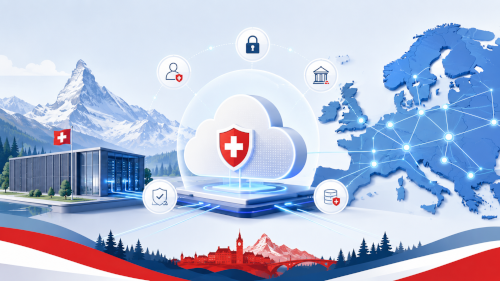
This blog entry has been written by me and reviewed with the help of AI. The image is completely AI-generated.